
Power, Silence, and the Price of Justice
The GuiltyThis thread examines how money, status, and local dependence protect exploitation, while the pursuit of truth challenges both legal institutions and communal silence.
increasing Bearing strength in each event
 decreasing
Bearing strength in each eventdecreasingThe Town’s Economic Bargain
The Town’s Economic Bargain
Prosperity with a cost
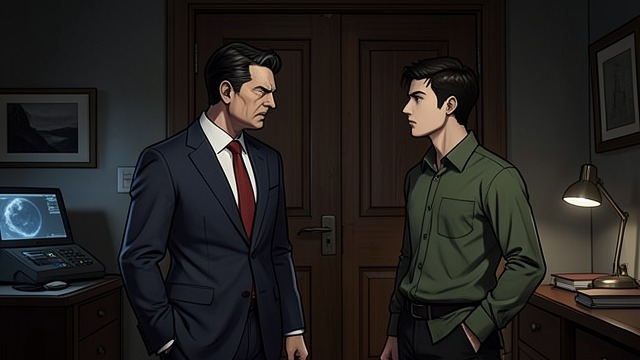
Will Robie returns to Cantrell and finds a community where local employment and political influence are closely bound to casino and energy businesses. People describe how Sherman Clancy grew wealthy after entering the casino trade, while the consequences of a major oil-rig lawsuit left many residents without well-paid work.
The town’s dependence makes power difficult to challenge. The companies are not just distant institutions; they are employers, taxpayers, and sources of political leverage in a place with few alternatives.
The limits of local enforcement
Sheriff Monda understands that suspicion is not the same as admissible proof, but he also admits that the Wendell family’s wealth and employment footprint make a direct investigation politically dangerous. Even when serious allegations emerge, officials weigh the risk of confronting powerful interests against the stability the town believes it needs.
The resulting tension is not simply between good and bad individuals. It is between the public duty to investigate wrongdoing and a local economy that teaches people to fear the cost of doing so.
The Courtroom and Its Interests
The Courtroom and Its Interests
A case shaped by local power
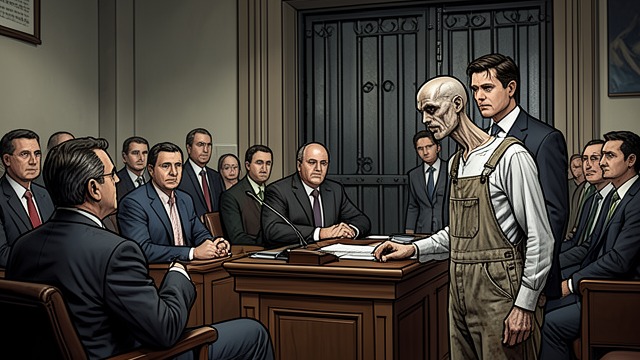
Daniel Robie is charged with murdering Sherman Clancy, and the arraignment draws a community ready to judge the family before the trial begins. Aubrey Davis prosecutes the case while openly carrying political ambitions and a history of conflict with the judge he now accuses.
The question of bail becomes a contest not only over evidence but over whether the defendant will be safer in jail. The hearing exposes how a small jurisdiction’s limited resources can turn custody into a claimed form of protection.
Justice under public pressure
Daniel elects to represent himself, although the judge urges him to seek independent counsel. His decision risks his future, while the prosecution’s posture suggests that professional responsibility and political opportunity may be difficult to separate.
The proceeding makes justice visible as a process shaped by people, institutions, and community judgment—not as an automatic result of facts. Robie’s efforts to secure Toni Moses for the defense become part of a wider attempt to ensure that the case is tested fairly.
Blackmail Behind Respectability
Blackmail Behind Respectability
Wealth built on hidden exploitation
Robie and Jessica Reel discover photographs showing Nelson Wendell abusing children at a secluded shack on Sherman Clancy’s farm. The discovery reframes the story of Clancy’s wealth: the supposed mineral-rights windfall appears to have been a cover for money extracted through blackmail.
Clancy used evidence of Wendell’s crimes for financial gain rather than seeking protection for the children. The arrangement joined powerful respectability to deliberate exploitation, allowing money to move while the children’s experiences remained hidden.
Complicity across social classes
Cassandra Clancy explains that Henry Barksdale helped arrange access to children of itinerant workers and that she accepted money to keep watch over them. Her account shows how a respected family, a poor farm, and a wealthy businessman could participate in the same abusive scheme for different reasons.
The revelations do not make every participant equally powerful or equally culpable. They do show how status and profit can make people reinterpret abuse as a private transaction, with the children’s safety displaced by the adults’ financial interests.
Evidence Against the Powerful
Evidence Against the Powerful
A compromised route to truth
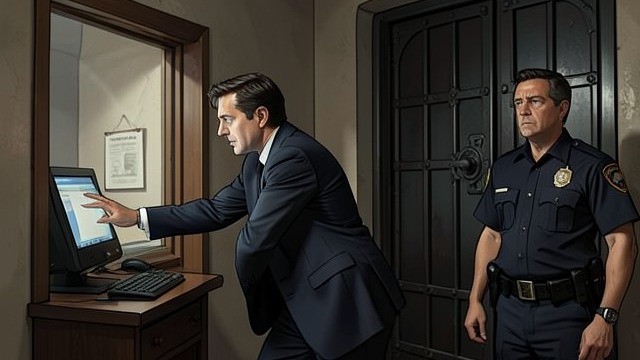
Will Robie breaks into the Clancy property and copies digital files that reveal the blackmail operation. Because the material was obtained unlawfully, it may be difficult for the defense or the FBI to use it directly in court.
The evidentiary problem mirrors the broader investigation: the truth may be visible, but exposing it requires methods that can undermine the legal case meant to establish it. Toni Moses warns that illegally obtained material can become a liability even when it points toward a genuine alternative suspect.
The institutions hesitate
Sheriff Monda is reluctant to pursue the Wendell family without stronger evidence, citing the family’s influence and the risk to his own department. The FBI’s interest is shaped by its separate investigation into a cross-state pattern of murders, while local authorities remain concerned with jurisdiction and proof.
These competing limits leave Robie and Reel doing investigative work beyond their official roles. The novel’s justice question becomes practical: when institutions hesitate, how can witnesses and evidence be protected without making the search itself indefensible?
Truth Beyond the Verdict

Truth Beyond the Verdict
The limits of a legal ending
The investigation ultimately identifies Victoria as the killer and reveals that she framed Daniel Robie while concealing her identity and history. The evidence clears Daniel of the murder charge, but the resolution comes through a violent confrontation rather than a conventional courtroom judgment.
Victoria’s crimes expose the damage hidden by the town’s silences, yet her death cannot restore the people she killed or repair the lives shaped by their abuse. A case can be solved without producing a complete form of justice for everyone harmed.
Accountability without simple closure
The story distinguishes legal proof from moral understanding. Daniel’s innocence of Clancy’s murder becomes clear, but the family must still reckon with his past treatment of Will, Victoria’s history of abuse, and the community’s failure to expose the exploitation earlier.
The final movement toward reconciliation does not declare the town or its institutions healed. Instead, it leaves accountability as an ongoing obligation: truth matters, but so do the choices people make after the facts can no longer be denied.
During Robie’s early return to Cantrell
At Dan Robie’s arraignment
As the investigation reaches the Clancy and Wendell businesses
After the digital files are decoded
After the killings are resolved
